
The Mistake: Thinking Bigger Just Means Taller
Here's how this argument usually starts. One of you wants to put a standard residential garage door on the new workshop, pole barn, or detached garage because "it's basically the same thing, just wider." The other one has a gut feeling that's wrong but can't explain why. It's a tempting assumption because residential and commercial overhead doors do look similar from the driveway: panels, tracks, a spring system, an opener on the ceiling. Why pay more or deal with a different vendor for something that opens and closes the same way?
The honest answer is that the similarity is skin deep. What's happening above the panels and inside the mechanism is built for a completely different job, and in this part of Florida, that difference shows up fast.
What Actually Separates Commercial From Residential
A few things change once a door is built for commercial or heavy-use duty:
- Cycle rating. A typical residential torsion spring is rated for somewhere around 10,000 open-close cycles, which is plenty for a family using the garage a few times a day for years. A door on a working shop, delivery bay, or home business that opens dozens of times a day burns through that cycle count far faster. Commercial springs and operators are rated for much higher cycle counts because they're expected to work that hard.
- Steel gauge and track design. Commercial doors generally use heavier-gauge steel panels and continuous angle tracks (solid steel angle instead of separate track sections) because they take more daily stress and need to hold their shape under repeated use.
- Horsepower and duty cycle of the opener. Residential openers are built for occasional use. Commercial-grade operators are built to run more often without overheating and often include features like manual chain hoists as backup, which matters if a door needs to keep functioning during a storm-related power outage.
- Engineering for wind load. This is the one that matters most locally. Any garage door in hurricane-prone Central Florida needs to be rated to resist a certain wind pressure without the panels buckling or the track pulling away from the frame. Commercial doors, especially larger ones, need that engineering done correctly for their size, not just scaled up from a residential spec sheet. A door that's technically rated for wind load at a 9-foot width doesn't automatically hold up at 14 or 16 feet.
Why This Matters More Here Than in a Dry, Mild Climate
Put a residential-grade door on a structure that needed commercial-grade, and the weather here will find the weak point. Humidity and afternoon downpours cause wood and composite panels to swell and warp faster when they're not built for heavier use and exposure. Steel that's too light-gauge rusts sooner, especially if the property is close enough to the coast to get salt air. And when a tropical system rolls through, an underbuilt large door is one of the more common points of failure in a structure, because a door that fails under wind pressure can let pressure build up inside and cause much bigger damage to the roof and walls.
None of this means every backyard shed needs a commercial door. A small detached garage used like a regular garage is usually fine with a quality residential door, properly wind-rated for its size. The distinction is about use and exposure, not just square footage.
Maintenance Looks Different Too
Because commercial and heavy-use doors cycle so much more often, they need attention on a different schedule:
- Hardware (hinges, rollers, cables) should be checked more frequently, since wear accumulates faster with higher daily use.
- Lubrication needs to happen more often, especially given the humidity here, which speeds up the gumming and grit buildup that leads to rough, noisy operation.
- Spring tension and balance should be checked on a tighter schedule than a once-a-year residential tune-up, since heavier use shifts a door out of balance sooner.
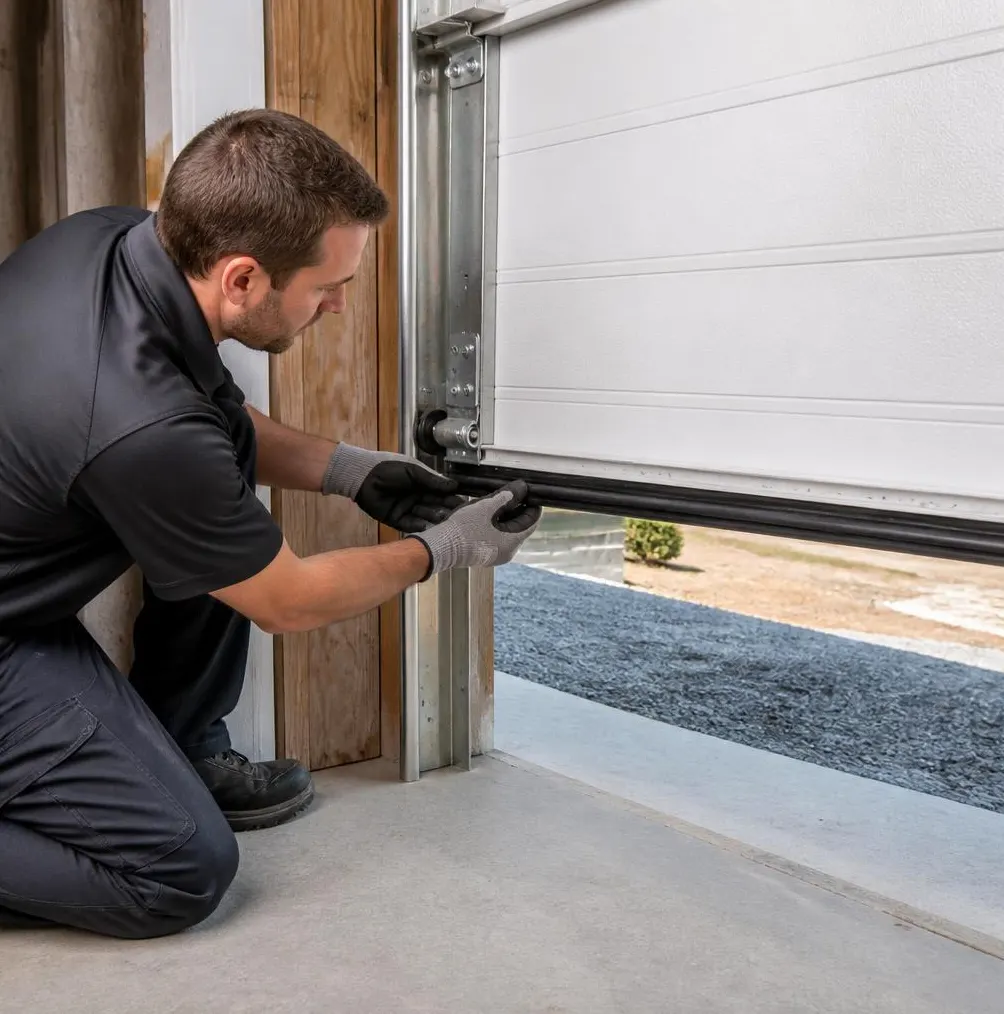
- Weatherseals and bottom astragals wear out faster on doors exposed to more frequent opening during the rainy season's afternoon downpours, so moisture gets a lot more opportunities to find its way in.
Skipping these checks on a heavy-use door doesn't just mean a squeaky door. It means a spring or cable failing at the worst possible moment, often mid-storm-season when a working door matters most.
So Who's Right in the Argument?
If the door in question is for a home workshop, a home-based business with regular vehicle or equipment traffic, or any structure that will open and close many times a day, the answer is: it needs to be specified and maintained like a commercial door, not treated as an oversized version of the one on the house. If it's a detached garage used the way a normal garage is used, a properly wind-rated residential door is the right call. The deciding factor is cycle count and exposure, not just size.
When to Call Waverly Door & Opener
If you're building a workshop, pole barn, or home business space and aren't sure which category your door falls into, that's exactly the kind of question worth a quick consultation before you buy anything. We can walk the site, talk through how the door will actually be used, and recommend the right spec, whether that means a properly wind-rated Garage Door Installation & Replacement for a standard detached garage or a heavier-duty setup for frequent use. If you already have a higher-use door that's starting to sound rough, cycle slowly, or show rust at the hinges, our Garage Door Maintenance & Tune-Up service catches those issues before a spring or cable lets go during a busy week.
If you're in Waverly, Winter Haven, Lake Wales, Dundee, Bartow, Haines City, Auburndale, or Frostproof and want a straight answer about what your door actually needs, give Waverly Door & Opener a call. We'll settle the argument for you.